
Whyte Island Rehabilitation Project
Partnering to protect and restore internationally significant coastal habitats
Whyte Island Rehabilitation Project
Commissioned by the Port of Brisbane
Project overview
The Whyte Island Rehabilitation Project is an ongoing ecological restoration initiative delivered through a partnership between the Bulimba Creek Catchment Coordinating Committee (B4C), Port of Brisbane Pty Ltd (PBPL), and subcontractor Tuff Yards. The site sits within the Moreton Bay Ramsar Wetland, supporting a mosaic of saltmarsh, mangrove, supratidal grassland, shrubland, and dry forest communities across a network of designated Restoration Management Units (RMUs).
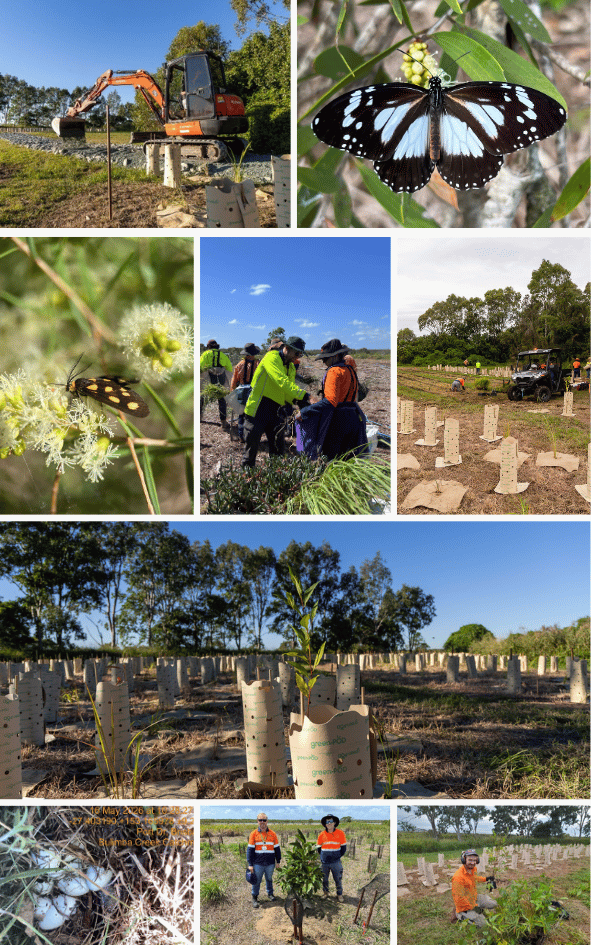
Since commencement in FY2023/24, the program has delivered over 13,000 native plants across more than 7 hectares of rehabilitated habitat, over 2500 hours of targeted weed control and rehabilitation, machinery-assisted clearing of approximately 0.9 hectares of mature Broadleaf Pepper, and key habitat enhancements including microbat boxes, and habitat logs. A strategic mid-program adjustment in FY2025/26 allowed for natural Phragmites australis regrowth following Broadleaf Pepper treatment, providing valuable ground-level cover for grassland bird species while native plantings establish.
Ecological monitoring through four seasonal bird surveys between July 2025 and May 2026 has captured early positive faunal responses, including new species colonising the site, nectar-feeders responding to flowering plantings, and confirmed active breeding within the rehabilitation area.
Weed Management
A total of 46 weed species were treated across 5.5ha, including Schinus terebinthifolia (Broad-leaved Pepper Tree), Lantana camara, Ochna serrulata, Anredera cordifolia (Madeira Vine), Megathyrsus maximus (Guinea Grass), Leucaena leucocephala, , and Baccharis halimifolia (Groundsel Bush). Control methods included targeted herbicide application, manual removal, and staged clearing of dense infestations, resulting in significant reductions in weed dominance and enabling natural regeneration and revegetation to proceed more effectively.
Revegetation:
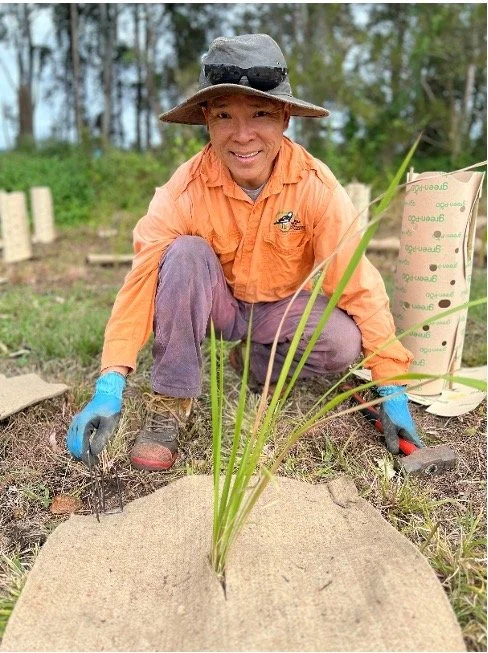
A total of 13,640 native plants were installed over 4ha, representing more than 50 species, including 10 saltmarsh species. Key species included Casuarina glauca, Melaleuca quinquenervia, Eucalyptus tereticornis, Eucalyptus siderophloia, and Sporobolus virginicus. These plantings are contributing to increased structural diversity and improved habitat connectivity across the site as restoration progresses.
Community engagement:
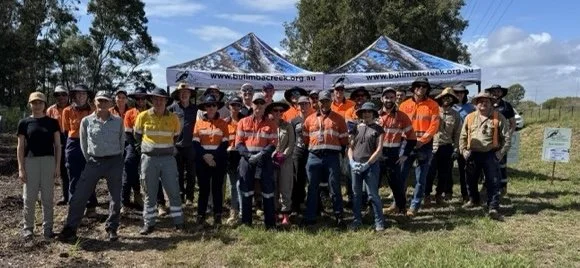
Three community events were delivered, including a February 2026 planting event involving 700 plants, contributing to on-ground outcomes and community participation. The events contributed to tangible site improvements, strengthened community stewardship, and increased local awareness and support for the rehabilitation project. To date, project has included nearly 500 hours of in-kind community involvement.
Bird surveys:
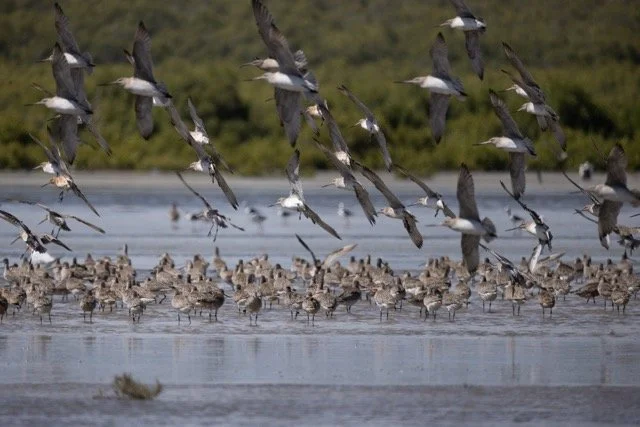
Four seasonal bird surveys (July 2025–May 2026) show early positive ecological responses, including new species colonisation, increased nectar-feeder activity, and confirmed breeding within the rehabilitation area. Hollow-dependent species (including Rainbow Lorikeet, Pale-headed Rosella, Sacred Kingfisher, and Laughing Kookaburra), were recorded across surveys.
Removal of Broad-leaved Pepper tree has temporarily reduced dense cover used by Superb Fairy-wren, Grey Fantail, and Striated Pardalote. The recent absence of Superb Fairy-wren likely reflects this short-term change; with recolonisation expected as native vegetation matures.
Grassland species such as Golden-headed Cisticola, Tawny Grassbird, Willie Wagtail, Brown Quail, and King Quail remain consistent, indicating suitable open habitat. The spread of Phragmites australis is providing effective ground shelter and nesting habitat, benefiting this group. Active breeding by Brown Quail (Coturnix ypsilophora) confirms retained habitat quality.
Nest boxes installed:
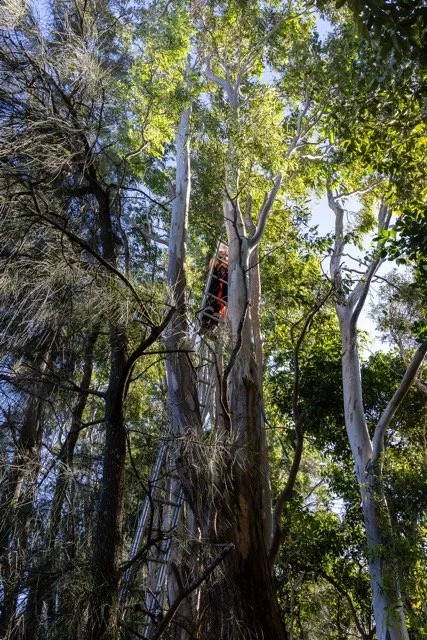
A total of 10 microbat nestboxes (including double, triple, and four-chamber designs) were installed in June 2025. Multi-chambered designs were strategically clustered in taller trees with good sun exposure and clear flight paths to support diverse species and roosting conditions.
Fire ant surveillance and treatment:
Fire ant nests were identified and treated across the project site over the two-year period, reducing potential ecological impacts.
Habitat augmentation:
Habitat complexity was enhanced through the installation of 10 m³ of habitat logs and 5 m³ of fauna rock, providing permanent shelter, basking sites, and refuges for a range of terrestrial fauna and reptiles.
Cane toad control:
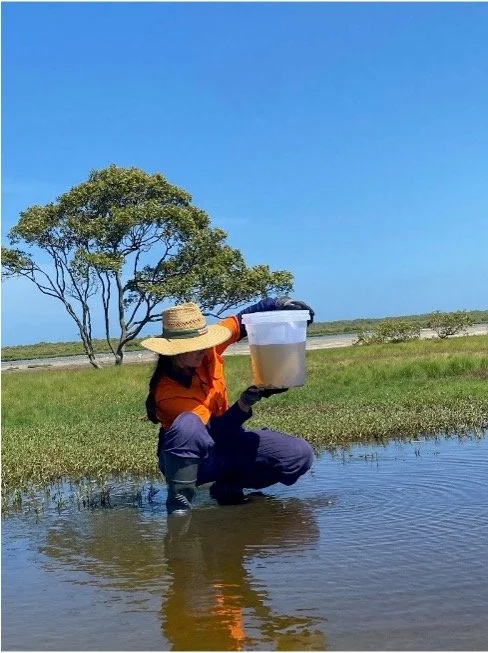
Cane toad populations were managed using targeted tadpole trapping methods, contributing to reduced pest pressure.