WIL Placement Deliverables
Industry Deliverable 1: Urban Landholder Factsheet
The first industry deliverable I produced was an educational factsheet for urban residents of the Upper Tingalpa Creek catchment, namely those living in the suburbs of Rochedale and Springwood which represent the more urbanised suburbs of the catchment area. Whilst developing this resource, myself and the team at B4C wanted it to highlight to urban residents that they live in a drinking water catchment, and that their actions have the potential to make a positive impact on raw water quality. As noted by my industry supervisor, community awareness of the catchment’s role in the region’s drinking water supply is relatively low, and hence emphasising to community that they live in a drinking water catchment was an important message to convey in the development of this factsheet. As Upper Tingalpa Creekcare is premised on protecting water quality at its source, this resource was needed by the program to inform residents of how they can contribute to protecting the raw water quality of their catchment, at the source. The factsheet will be made available to community via letterboxing, handing out at Upper Tingalpa Creekcare events, and posting via the Upper Tingalpa Creekcare Facebook page, prompting urban residents to take action and engage with the program and B4C.
Developing this resource required me to review and analyse the literature on best management practices for water quality protection in an urban setting, and to translate that scientific information into something that the catchment community could engage with and understand. It also required me to learn how to use design software I previously had no experience with, including Canva and Procreate. I used Canva as the basis for creating the factsheet itself, whilst Procreate was used to develop a stormwater practices infographic to be included on the factsheet. Through collaboration and discussions with my supervisor, we decided that an infographic would be beneficial, as it would provide a visual component for residents to engage with, reducing the need for text and supplying an alternate means of communication. Developing this infographic tested my skills in graphic design, and involved drafting a 2-dimensional sketch, using AI to develop an infographic based on my sketch, and then uploading this image to Procreate as a base for which to refine, rearrange and add to. Developing this resource required me to work both independently and collaboratively, seeking input and feedback from B4C and Seqwater staff, and working within Seqwater’s communication guidelines.
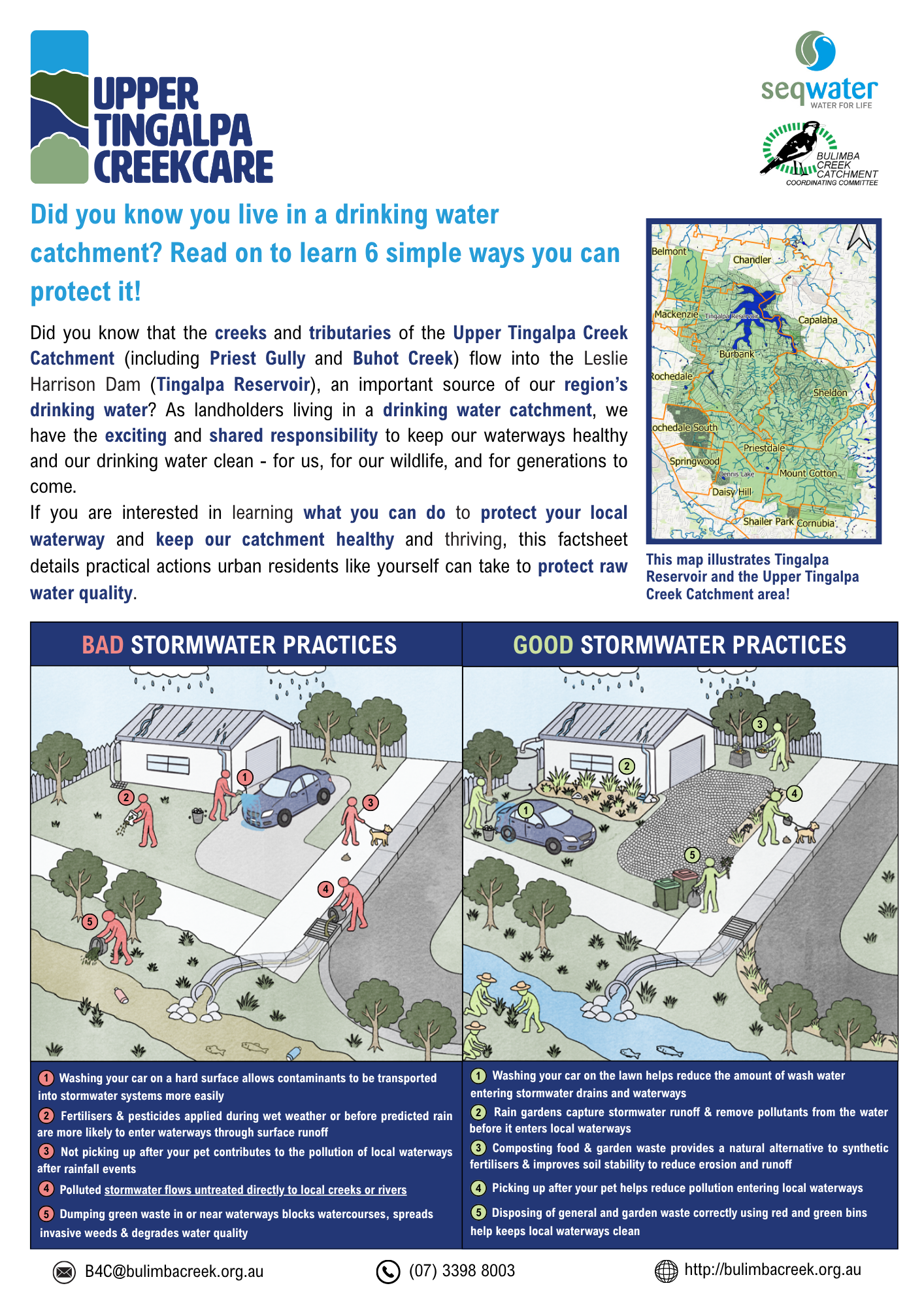
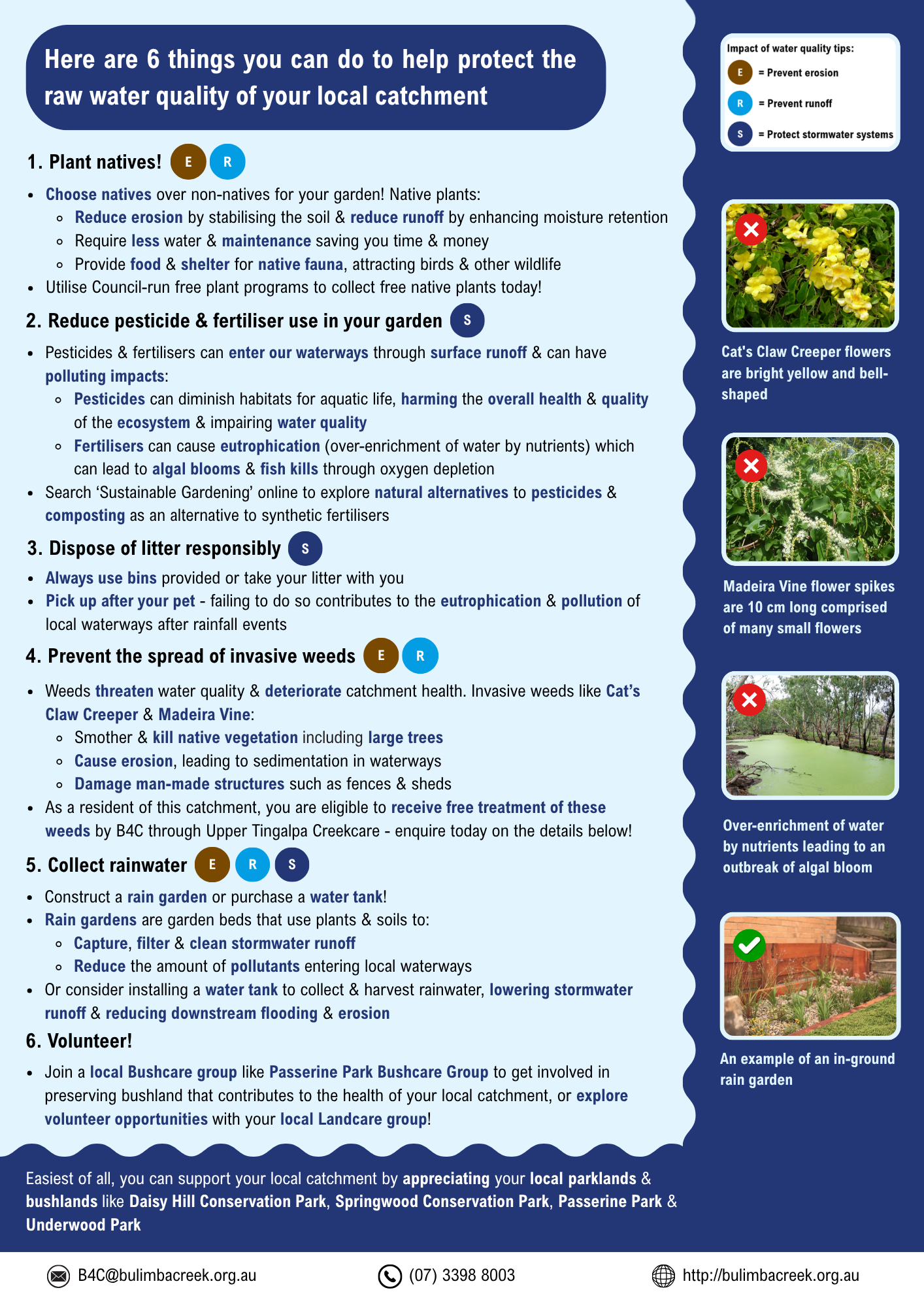
View the complete Urban Landholder Factsheet (PDF)
Deliverable 2: Landholder Champion Case Study
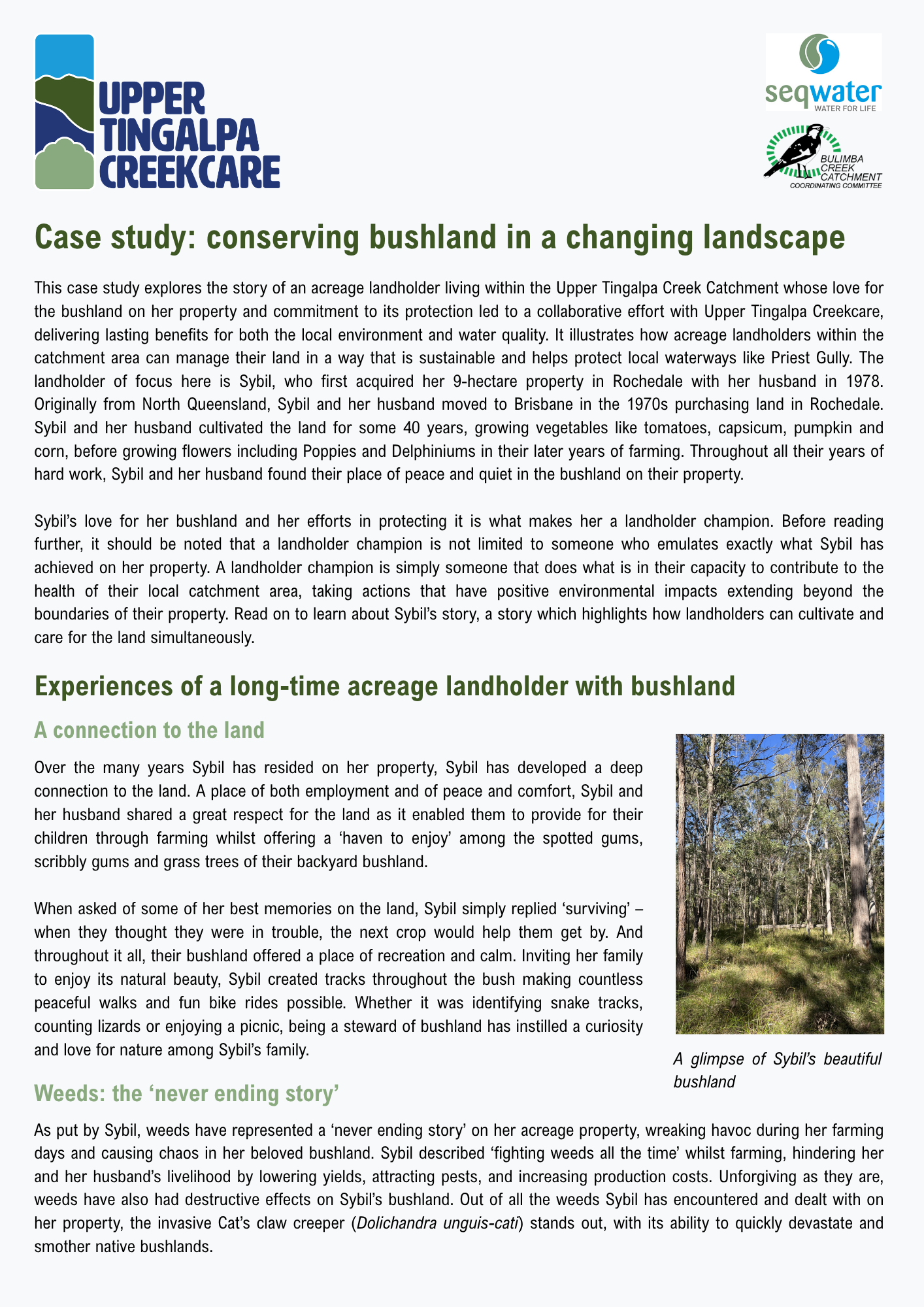
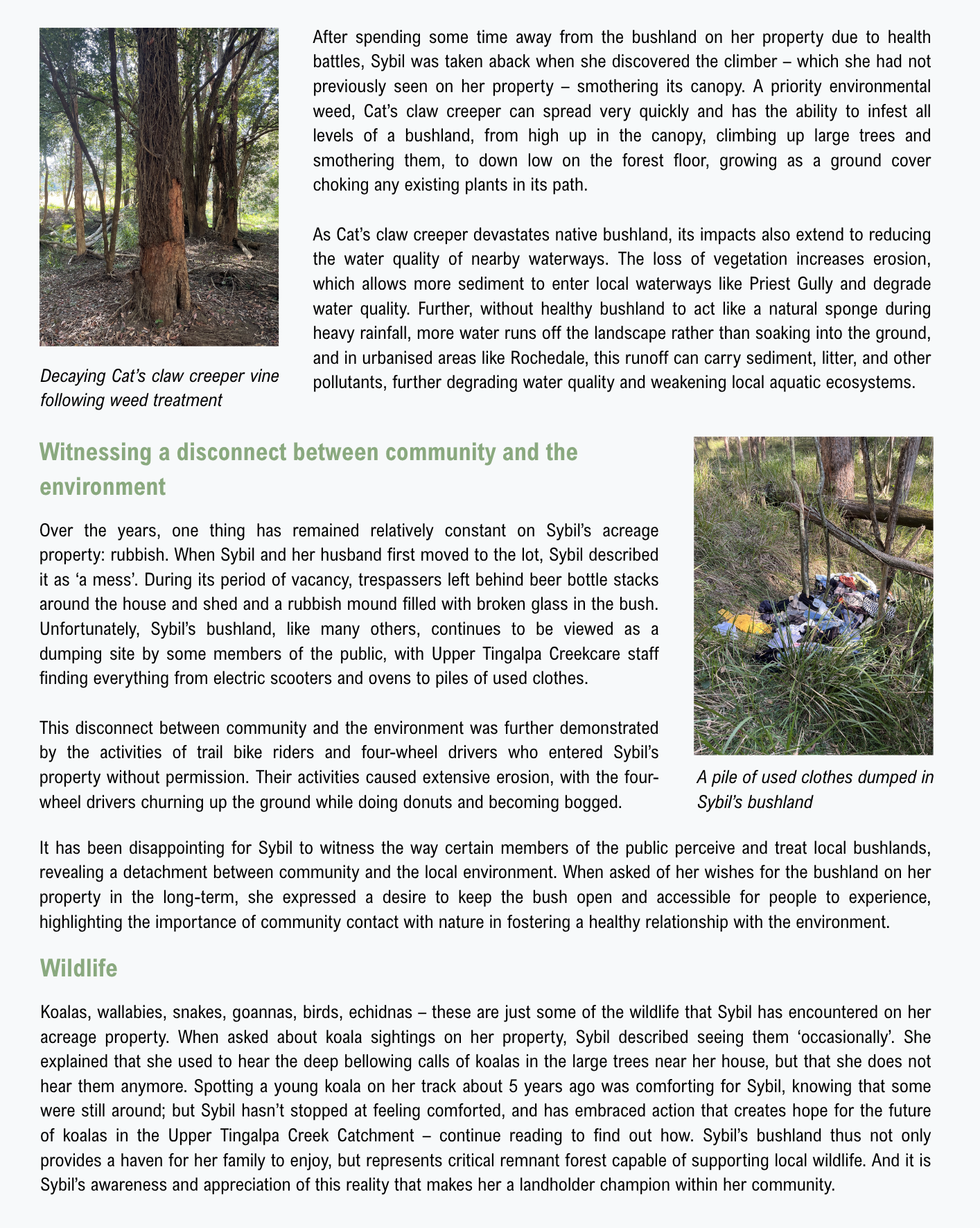
The second industry deliverable I produced was a case study, representing an additional educational and community engagement resource forming part of the Upper Tingalpa Creekcare program. This case study was developed to highlight the environmental restoration works undertaken by a private property owner living in Upper Tingalpa Creek catchment in collaboration with Upper Tingalpa Creekcare. The landholder of focus in this case study owns a large acreage property, and hence this resource was developed to specifically target and inspire peri-urban and rural landholders of the catchment area with similar property features. A primary objective for this resource was to create a narrative that is educational, informative and personal, cultivating a sense of community through recounting shared experiences, and providing insights into how land can be sustainably managed to the benefit of the landholder and the health of the catchment.
The case study was developed by drawing on the findings of an informal interview that was conducted with the private property owner. With the assistance of B4C staff, I developed the interview questions and conducted the interview, focusing on topics such as the land management practices adopted by the landholder and their efforts and investment in environmental restoration projects. Drawing on the notes I recorded during the interview, I then crafted the case study narrative, ensuring it aligned with the intended messaging while preserving the authenticity and integrity of the landholder's story. Like the educational factsheet for urban residents, this resource is needed by my employer as part of the Upper Tingalpa Creekcare program. By sharing the story of a landholder who has cultivated and cared for the land simultaneously, this resource shows community how both practices can go hand-in-hand and highlights the support, sense of community and environmental outcomes that can be realised with open collaboration and engagement with Upper Tingalpa Creekcare and other natural resource management groups. This case study will be shared with community via letterboxing, the B4C website and handing out at Upper Tingalpa Creekcare events, encouraging local acreage landholders to engage with the program and tap into a network of community and invaluable support.
View the complete Landholder Champion Case Study (PDF)