
Critical Reflection on WIL
Over the course of my 12-week WIL placement with B4C, I contributed to Upper Tingalpa Creekcare, and in doing so, I had the opportunity to engage with a variety of activities and experiences, gaining new skills, learning a lot about myself and broadening my perspective in the process.
My contribution to this program involved developing educational and community engagement resources for residents of the Upper Tingalpa Creek catchment. To produce the first industry deliverable, I needed to translate scientific information into content that was accessible, engaging and relevant to the local community. While my university studies equipped me to review and analyse scientific literature, communicating science to a non-technical audience was a skill I had limited opportunity to develop previously and was one of the key reasons I was interested in undertaking this placement. Producing this deliverable was both challenging and rewarding, directly assessing Science Threshold Learning Outcome (TLO) 4, which specifies that science graduates will be effective communicators of science. Reflecting on the final product, it is clear that the task pushed me beyond my comfort zone. Although I worked to minimise technical language, some scientific terminology remained, highlighting an area for continued growth. Nevertheless, I believe the resource succeeds in engaging its intended audience and communicating key messages about water quality. The project also allowed me to develop skills in Canva and Procreate, which I used to create the accompanying infographic. Learning to use these design tools highlighted the important role that visual communication plays in making scientific information accessible to broader audiences. Overall, this deliverable provided a valuable opportunity to develop my science communication skills and apply them in a real-world context.
Like the first deliverable, developing my second industry deliverable involved engaging in tasks that were new and unfamiliar to me, building my confidence in areas where I had limited experience. Producing this community engagement resource required me to conduct an informal interview and write a case study, both of which were entirely new to me. This project challenged both my confidence and analytical skills, requiring me to develop effective interview questions, actively listen, take notes, ask thoughtful follow-up questions, and analyse responses in real time while maintaining a respectful and engaged approach. Writing the case study was equally rewarding and provided an opportunity to transform the interview into a compelling narrative. Overall, this deliverable involved significant learning and personal growth, enabling me to demonstrate personal and professional responsibility in accordance with Science TLO 5 while further developing my communication, analytical, and stakeholder engagement skills.
Throughout my WIL placement, I was fortunate to have additional experiences beyond working on my placement deliverables that really enriched my time with B4C. In my third week of placement, I had the opportunity to meet and speak with Andrew Powell MP, Queensland's Minister for the Environment, at a special event celebrating B4C's successful DETSI Koala Habitat Grant. The following week, I met Councillor Emily Kim of Calamvale Ward to discuss potential funding opportunities for environmental restoration works at Calamvale District Park. And on my final day of placement, I attended a Volunteer Grants Morning Tea in Wynnum, where I met Kara Cook MP, the Federal Member for Bonner, and celebrated the achievements of local community organisations like B4C in securing funding to support their work.
Collectively, these experiences strengthened my confidence in communicating with government and community leaders. Meeting Andrew Powell MP was a defining moment in my placement, as it tested my ability to communicate with senior public figures. Having had limited experience engaging with leaders at this level, I initially found the interaction somewhat daunting. However, as the placement progressed and I interacted with both Emily Kim and Kara Cook MP, I became increasingly confident in my ability to communicate professionally and articulate my ideas clearly. These experiences were not something I could have fully prepared for through university study alone, underscoring the significant role this WIL placement has played in complementing my academic learning and preparing me for the transition into post-graduate life. Following these experiences, I hope to further strengthen my confidence and communication skills when engaging with decision-makers, as I recognise the significant value these capabilities will bring to my future professional development.
Evidently, this WIL placement tested my abilities, pushed me beyond my comfort zone, and helped me identify areas for future growth, making it an invaluable step in my professional development. It also broadened my perspective on environmental governance by providing firsthand insight into the operation of a Landcare organisation and the role community engagement plays in achieving environmental outcomes. Highlights included participating in and assisting community and corporate planting events, attending a meeting with Seqwater to discuss Upper Tingalpa Creekcare communication plans, and writing the landholder champion case study designed to resonate with local landholders. Together, these experiences reinforced the importance of education and community connection in driving environmental outcomes, giving me a deeper appreciation of environmental education in practice.
Moving forward, I have taken away two valuable insights from this WIL placement. First, although environmental education is not the specific field I intend to pursue professionally, the placement strengthened my written and interpersonal communication skills, which are essential and highly transferable across any career path. Second, it helped me identify public speaking and effective communication with decision-makers as key areas for ongoing professional development. Throughout the placement, I was inspired by B4C colleague Callum's confidence when presenting at Upper Tingalpa Creekcare events and engaging with important stakeholders. His ability to communicate clearly and professionally highlighted a skill set that I hope to continue developing in my own career. While I ultimately aspire to work in environmental consultancy, this placement proved invaluable in building the transferable and soft skills that will support my professional growth and benefit me throughout my future career.
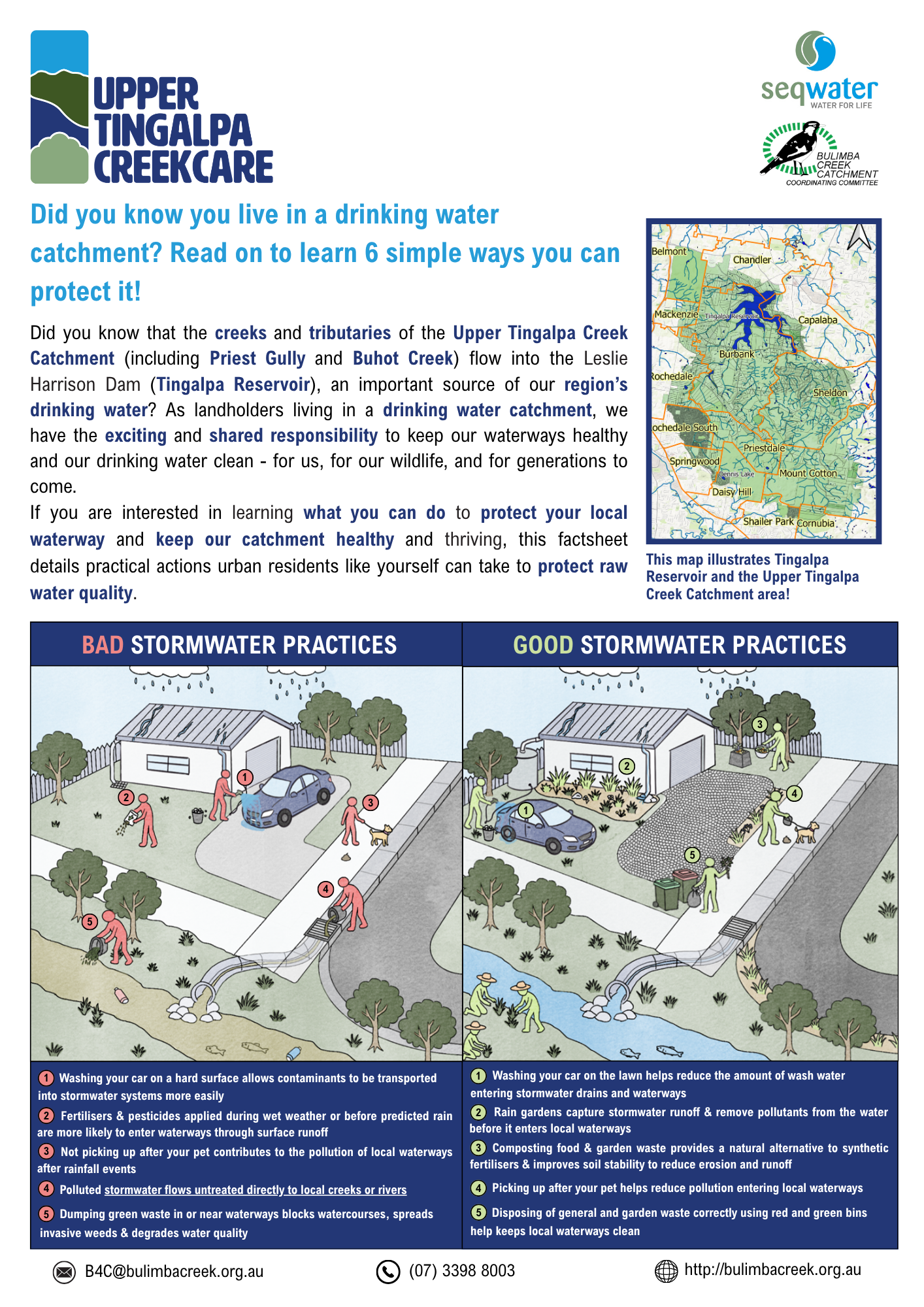
Front cover of first industry deliverable: educational factsheet for urban residents
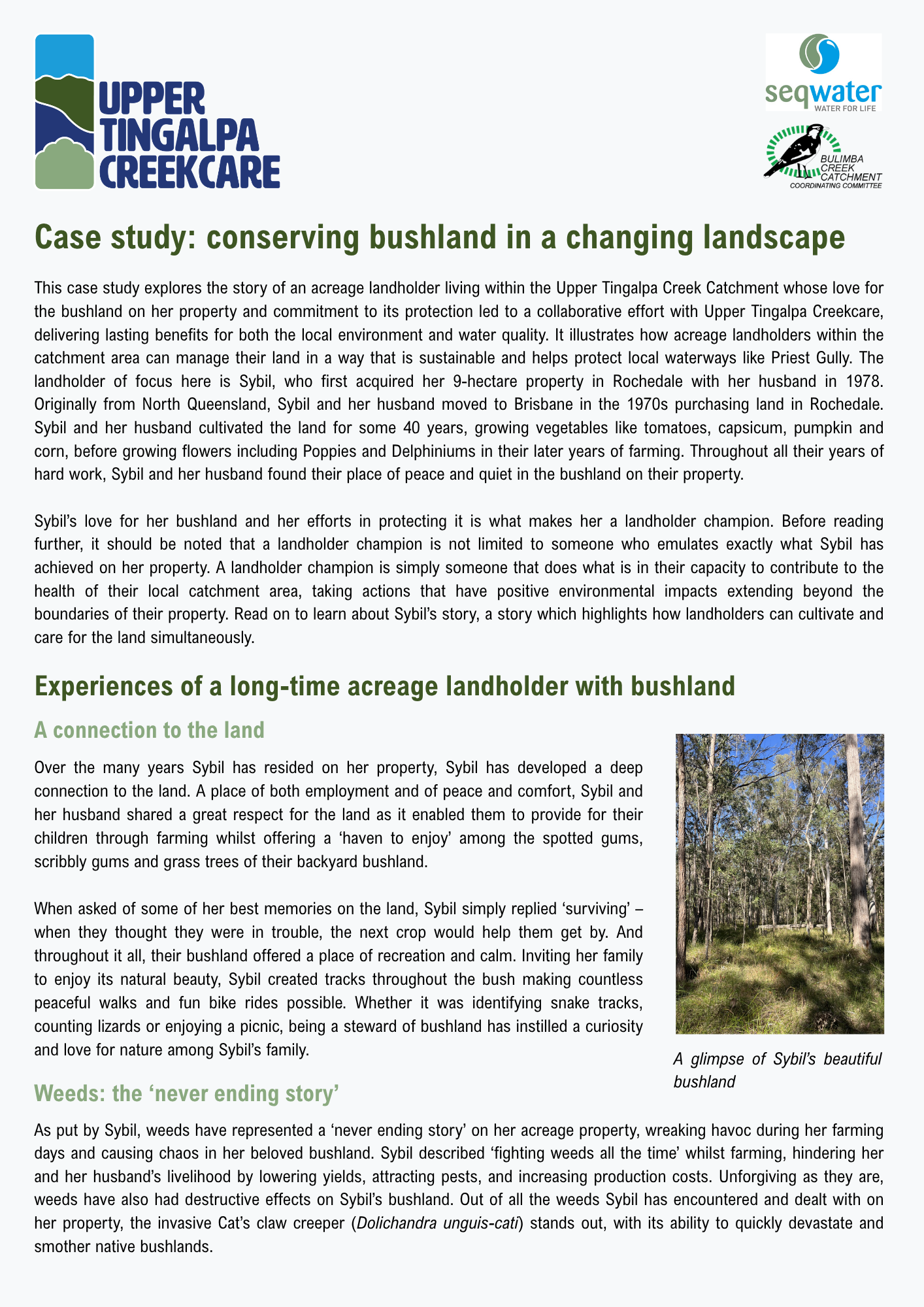
Front cover of second industry deliverable: landholder champion case study
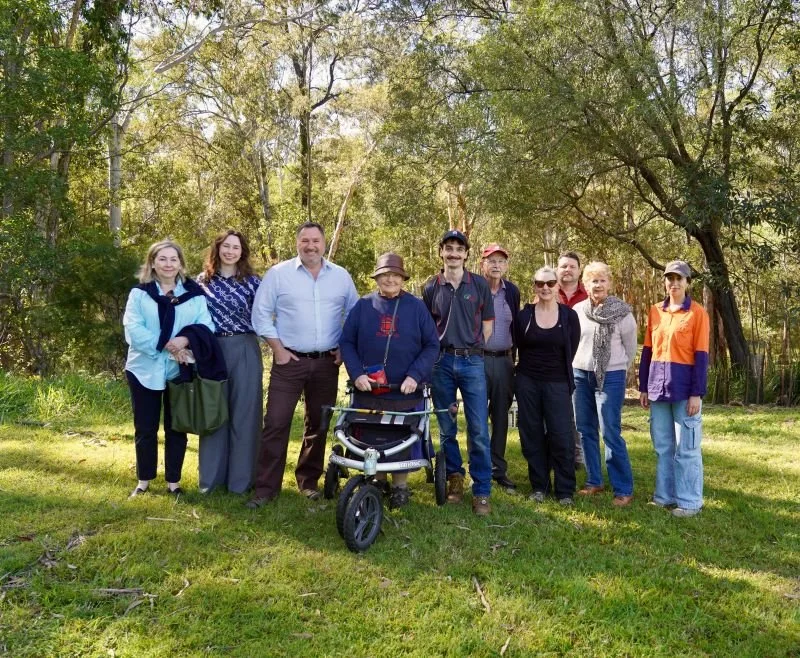
Attending a DETSI Koala Habitat Grant meeting with Andrew Powell MP (pictured far right)
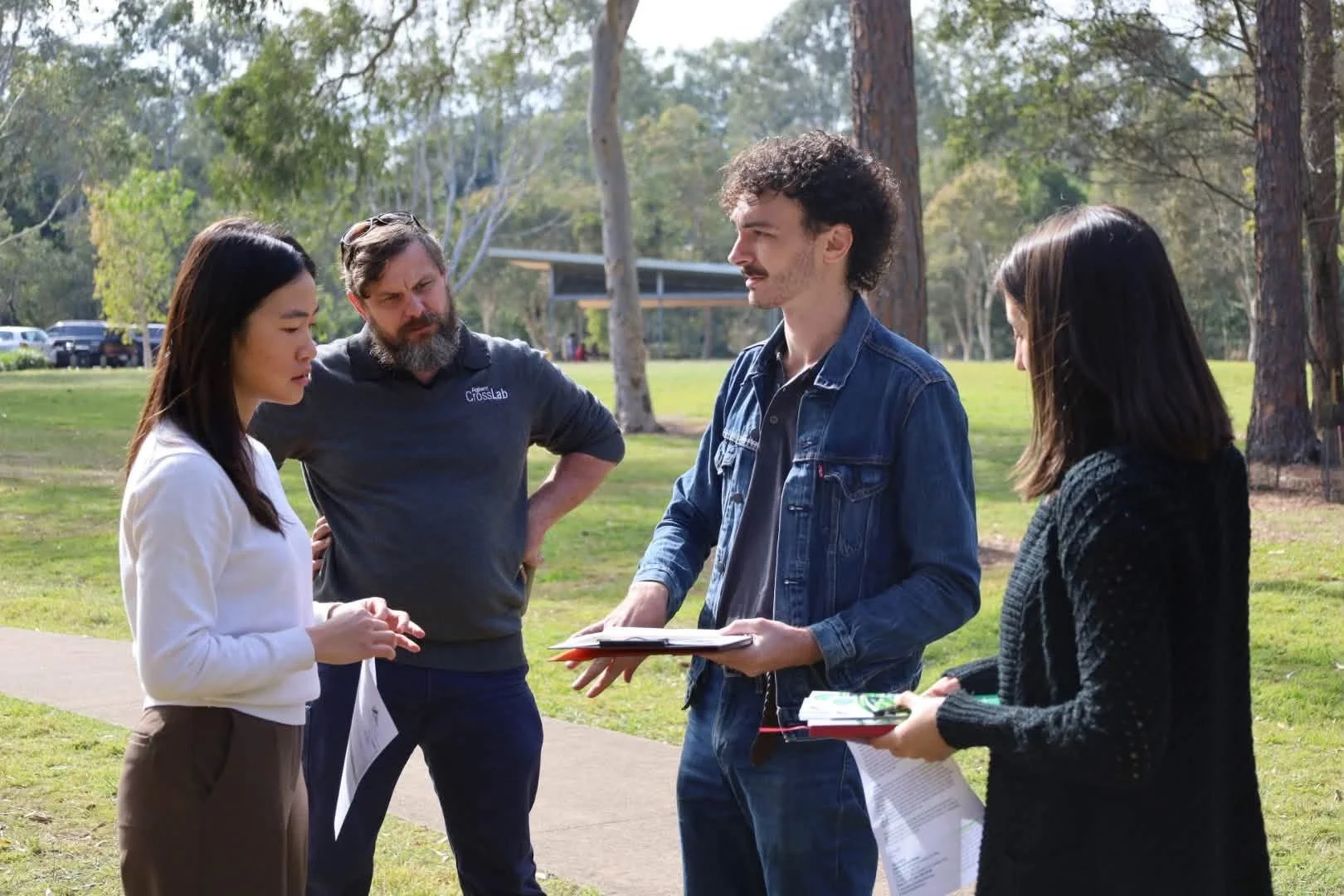
Meeting Councillor Emily Ward at Calamvale District Park
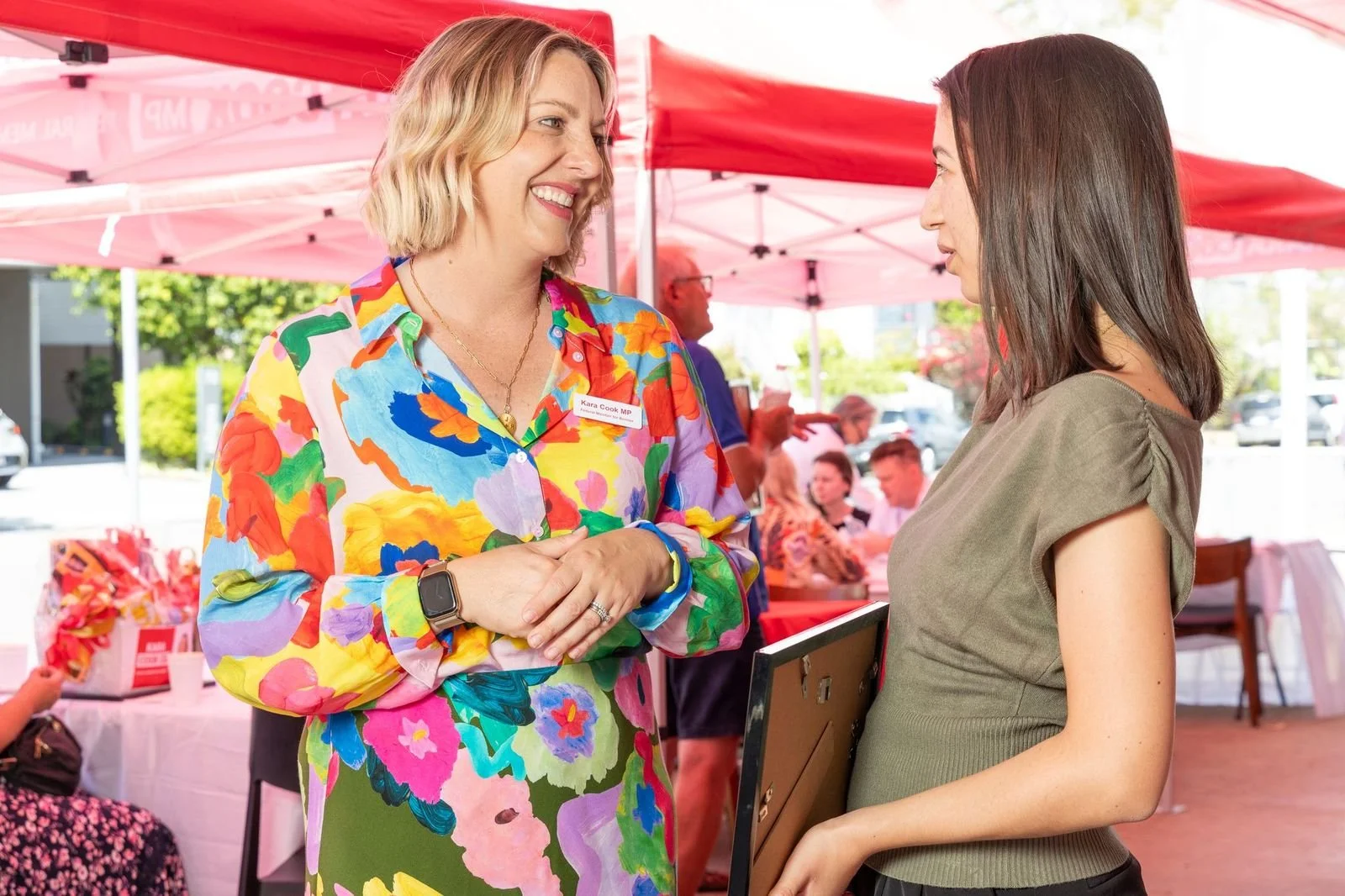
Speaking with Kara Cook MP at Volunteer Grants MT